Industrial Generator Sizing: How to Choose the Right kVA Capacity
Step-by-step guide to calculate the exact generator capacity your factory or business needs. Avoid the costly mistakes of over-sizing and under-sizing.
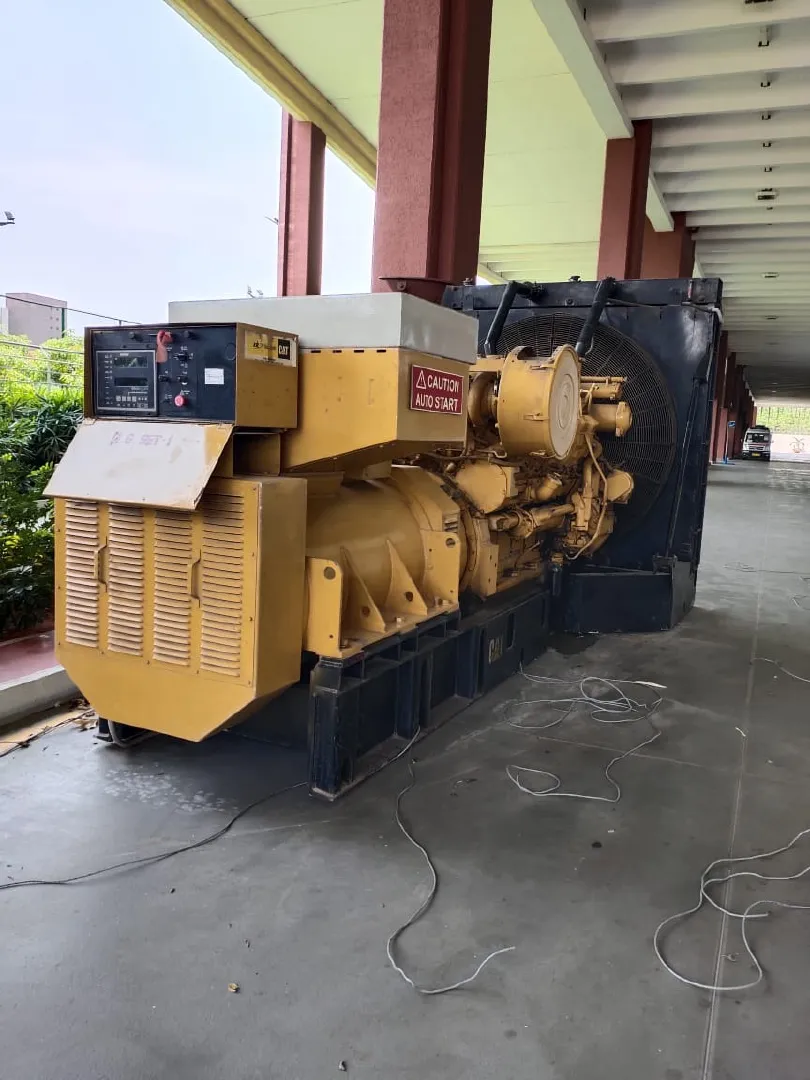
Why Correct Generator Sizing Matters
Choosing the wrong generator size is one of the most expensive mistakes an industrial buyer can make - and it happens surprisingly often. An over-sized generator wastes fuel, increases maintenance costs, and can cause wet stacking (carbon buildup from running at low loads). An under-sized generator cannot handle peak loads, causes voltage drops, overheats, and can damage both the genset and your connected equipment.
We have seen factories in Bhiwadi purchase 500 kVA generators when 250 kVA would have been sufficient - wasting ₹5-8 lakh on unnecessary capacity. We have also seen businesses buy 62.5 kVA units for loads that actually require 125 kVA, leading to repeated shutdowns and equipment damage. Both scenarios are avoidable with proper load assessment.
Step 1: List All Connected Equipment
Start by listing every piece of equipment that will run on the generator. For each item, note:
- Running watts (kW): The continuous power the equipment consumes during normal operation
- Starting watts (kW): The surge power needed when the equipment starts. Motors and compressors typically need 3-6x their running watts for the first 2-5 seconds
- Power factor: Most industrial equipment has a power factor of 0.8. This means 100 kW of real power requires 125 kVA of apparent power from the generator
Step 2: Calculate Total Running Load
Add up all running watts. But do not just sum everything - apply a diversity factor. In a typical factory, not all equipment runs simultaneously. Common diversity factors:
- Manufacturing facility: 0.6-0.8 (60-80% of equipment runs at any given time)
- Commercial building: 0.7-0.9
- Hospital/Data center: 0.9-1.0 (critical - assume near-full load)
- Construction site: 0.5-0.7 (equipment usage is phased)
Step 3: Account for Starting Currents
The biggest sizing mistake is ignoring motor starting currents. When a large compressor, pump, or CNC machine starts, it draws 3-6 times its running current for a few seconds. Your generator must handle this surge without tripping or dropping voltage below acceptable limits (typically 10% voltage dip maximum).
Rule of thumb: identify your single largest motor. Your generator must be sized to handle all running loads PLUS the starting surge of that largest motor simultaneously.
Step 4: Add Future Expansion Margin
Always add 15-25% margin above your calculated requirement. This accounts for:
- New equipment added in the next 3-5 years
- Seasonal load variations
- Aging equipment drawing more power than rated
- Generator derating in high-temperature conditions (above 40°C, generators lose 3-4% capacity per 5°C)
Quick Sizing Examples
| Application | Typical Load | Recommended Generator |
|---|---|---|
| Small workshop (welding, drilling) | 15-25 kW | 40-62.5 kVA |
| Medium factory (CNC, compressor, lighting) | 60-100 kW | 125-160 kVA |
| Large factory (multiple motors, furnaces) | 150-400 kW | 250-625 kVA |
| Commercial building (lifts, HVAC, lighting) | 80-200 kW | 125-320 kVA |
| Construction site (crane, mixers, tools) | 40-150 kW | 82.5-250 kVA |
| Hospital (critical + comfort loads) | 100-300 kW | 200-500 kVA |
Free Site Survey and Sizing Consultation
Calculating generator size involves nuances that a simple formula cannot capture - motor starting sequences, harmonic loads from VFDs, UPS interactions, and site altitude/temperature derating. That is why Alpha Diesels offers free on-site power surveys across Bhiwadi, Neemrana, Bawal, Gurugram, Manesar, and Delhi-NCR. Our engineers will measure your actual load profile using clamp meters and power analyzers, then recommend the exact capacity you need - new or used.
Call +91-97993-03700 to book your free consultation.
Need Expert Help?
Our team of generator experts is ready to help you with any questions about generator sizing.
Related Articles
GRAP Stages and Generators: What Can Run at Each Stage in Delhi NCR (2026-27 Season Guide)
11 min read
What Is RECD? A Plain-English Guide to Retrofit Emission Control Devices for Diesel Generators
10 min read
Silent Generators on Rent: dB Levels, Prices, and How to Choose the Right Canopy Grade
9 min read