Delhi NCR Diesel Generator Rules 2026: What's Banned, What's Allowed, How to Stay Compliant
CAQM enforcement is active across Delhi NCR. This guide explains exactly which generators can legally operate today, which are banned, the GRAP seasonal restrictions, fines you face, and the three legal compliance paths - RECD retrofit, new CPCB IV+ purchase, or buy-back trade-in.
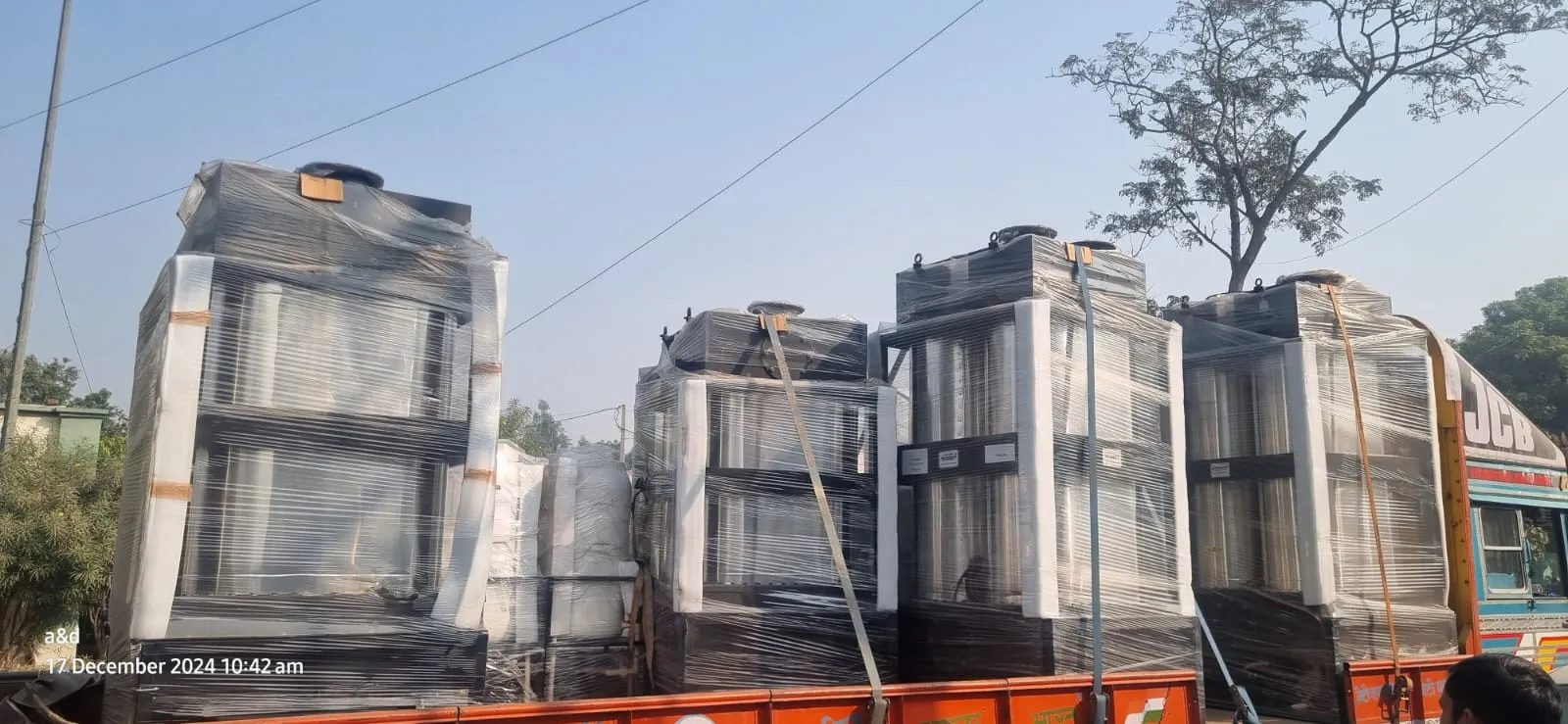
Last updated: May 2026. If you operate a diesel generator anywhere in Delhi NCR - including Bhiwadi, Gurgaon, Faridabad, Noida, Ghaziabad, Manesar, or Greater Noida - you are now under active enforcement by the Commission for Air Quality Management (CAQM) and state pollution boards. This guide explains, in plain language, what is banned right now, what is still allowed, what it actually costs to comply, and the three legal paths your facility can take.
Why Delhi NCR Has the Strictest Generator Rules in India
Delhi NCR contributes a disproportionate share of India's industrial emissions during winter. Diesel generators are a significant contributor - especially in industrial belts like RIICO Bhiwadi, IMT Manesar, HSIIDC Bawal, and Noida Phase II - where thousands of factories run gensets daily for backup or prime power.
The CAQM was created specifically to manage air quality in Delhi and adjoining NCR districts. It has issued a series of Directions over the past three years that progressively tighten what generators can operate, when they can run, and under what conditions. State pollution boards (DPCC for Delhi, HSPCB for Haryana, UPPCB for UP, RSPCB for Rajasthan) enforce these on the ground with inspections, ANPR cameras at fuel stations, and consent-to-operate audits.
The result: if your generator is non-compliant, you are no longer "probably fine until someone notices." You are operating in an active enforcement zone where inspections are routine and fines are levied within days, not months.
The Three Key CAQM Directions That Affect Your Generator
Direction 71 (2022): Phased restriction on non-CPCB IV+ DG sets
Established the framework that generators must transition to CPCB IV+ compliance or retrofit with an approved Retrofit Emission Control Device (RECD). Set the precedent for capacity-tier-based requirements - smaller gensets had longer transition windows, larger industrial units (above 800 kW) had to comply first.
Direction 76 (2023): Operational restrictions during GRAP
Restricted diesel generator operation during Graded Response Action Plan (GRAP) stages in winter. Under GRAP Stage 3 (severe air quality) and Stage 4 (severe+), even compliant gensets face restrictions on hours of operation, with emergency exemptions only for hospitals, telecom, data centers, and essential services.
Direction 89 (2025): ANPR enforcement and end-of-life vehicle context
Primarily about end-of-life vehicles, but expanded ANPR (Automatic Number Plate Recognition) infrastructure across NCR fuel stations from October 2025 in NCT Delhi and 5 high-density districts (Gurugram, Faridabad, Ghaziabad, Gautam Budh Nagar, Sonipat), and from April 2026 in the rest of NCR. The same enforcement infrastructure feeds into generator compliance audits at industrial premises.
What Is Banned Right Now in Delhi NCR
- Pre-CPCB IV+ diesel generators above 800 kW operating without RECD retrofit. These are the highest-emission category and have been under restriction since 2023.
- Pre-2014 diesel generators (CPCB I or unrated) without RECD retrofit, in NCT Delhi. These cannot legally operate in commercial or industrial premises.
- Operation of any non-emergency diesel generator during GRAP Stage 3 or 4, except for essential services (hospitals, telecom, defense, water supply, emergency operations).
- Installation of new non-CPCB IV+ generators anywhere in NCR. New gensets must meet the latest emission norms - no exceptions.
- Continued operation under expired Consent to Operate (CTO) from the relevant state pollution board. Many facilities have been fined simply because their CTO lapsed.
What Is Still Allowed
- CPCB IV+ compliant diesel generators of any capacity, anywhere in NCR. These are the latest-emission-norm units (typically post-2023 manufacture) with CRDI engines and integrated emission controls. See our CPCB IV+ supply.
- Pre-CPCB IV+ gensets with a CPCB-approved RECD retrofit installed. The RECD brings emissions to the latest norm and includes ARAI/ICAT certification. RECD pricing guide here.
- Dual-fuel converted gensets running on diesel + natural gas (PNG/CNG) where gas infrastructure is available. Dual-fuel options here.
- Gas-only (PNG) generators, which are exempt from many diesel-specific restrictions.
- Emergency operation for essential services even during GRAP, with proper documentation.
State-by-State Compliance Snapshot
Delhi (DPCC + CAQM)
Strictest enforcement in the country. Active inspections in industrial pockets like Bawana, Narela, Mayapuri, and Okhla. Penalties for non-compliant gensets range from Rs 1 lakh to Rs 15 lakh depending on capacity and violation history. Repeat violators face sealing of premises.
Haryana (HSPCB) - Gurgaon, Faridabad, Manesar, Bawal, Rewari
Aligned with NCR norms. IMT Manesar, HSIIDC Bawal, and Gurgaon Sector industrial pockets see regular pollution board inspections. CAQM directions apply in full for the NCR-designated districts. State pollution board audits CTO compliance and emission norms together.
Uttar Pradesh (UPPCB) - Noida, Greater Noida, Ghaziabad
NCR-aligned. ANPR enforcement infrastructure being rolled out per Direction 89. Industrial inspections active in Greater Noida industrial areas, particularly in EPIP and Surajpur belts.
Rajasthan (RSPCB) - Bhiwadi, Neemrana, Alwar, Khushkhera
Active inspections in RIICO industrial zones, especially Phase I-VI Bhiwadi. While Rajasthan is not formally NCR for CAQM purposes, RSPCB enforces equivalent norms because the airshed is shared. Industrial units above 125 kVA are expected to retrofit or replace under state-level direction.
The Three Legal Paths Forward
If your existing generator is pre-CPCB IV+, you have three legitimate options. The right one depends on your genset age, capacity, runtime, and budget. We supply all three and will recommend the path that genuinely costs you the least over 5 years.
Path 1: RECD Retrofit (cheapest legal path)
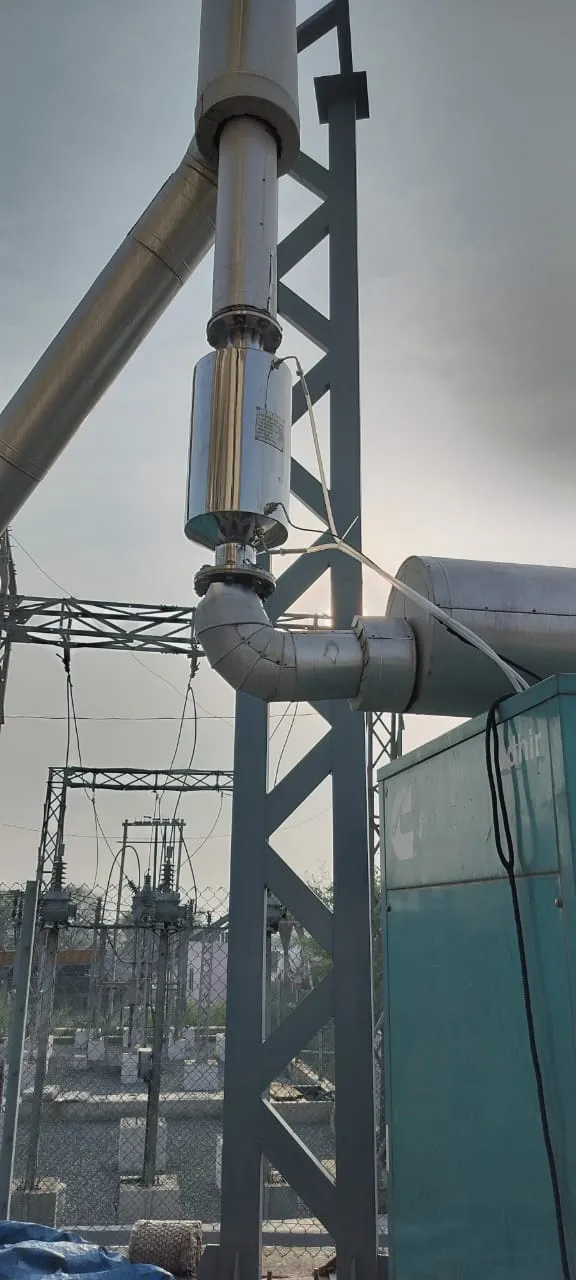
Install a CPCB-approved Retrofit Emission Control Device on your existing generator. The RECD is a diesel particulate filter system integrated into the exhaust line that brings emissions down to CPCB IV+ compliant levels.
Indicative cost:
- 5 - 25 kVA: Rs 0.5 - 1.2 lakh
- 25 - 100 kVA: Rs 1.0 - 1.8 lakh
- 100 - 250 kVA: Rs 1.5 - 3.0 lakh
- 250 - 500 kVA: Rs 3.0 - 5.0 lakh
- 500 - 1500 kVA: Rs 5.0 - 8.0 lakh
Best for: Gensets 100-500 kVA, under 10,000 running hours, healthy engine and alternator. Install completes in 1-3 working days. ARAI/ICAT certification included. Full RECD price guide.
Not ideal for: Very small (under 25 kVA - poor ROI) or very large (over 1000 kVA - install complexity rivals new genset cost) units.
Path 2: New CPCB IV+ Genset (best long-term)
Replace with a new CPCB IV+ compliant unit. We supply Greaves Power (our primary brand), Cummins, Kirloskar (KOEL), and Mahindra Powerol depending on your kVA need and use case.
Indicative cost:
- 5 - 25 kVA: Rs 1.5 - 4 lakh
- 30 - 62.5 kVA: Rs 4 - 8 lakh
- 82.5 - 125 kVA: Rs 8 - 14 lakh
- 160 - 250 kVA: Rs 14 - 25 lakh
- 320 - 500 kVA: Rs 25 - 50 lakh
- 625 - 1000 kVA: Rs 50 - 90 lakh
- 1500 - 2500 kVA: Rs 90 lakh - 2 crore
Best for: Gensets older than 10 years, units running above 10,000 hours, or facilities where capacity needs are changing anyway. Comes with 10-15% better fuel economy from CRDI engines, IoT remote monitoring, 5-year warranty on premium models, and the highest resale value.
Path 3: Buy-back + Inspected Used CPCB IV+ (hybrid)
Sell your non-compliant unit to us, buy a 1-3 year old CPCB IV+ from our inspected inventory. Net outlay after buyback offset is typically Rs 1-30 lakh depending on capacity. Browse used inventory + get a buyback estimate.
Best for: Buyers who want compliance with warranty at 40-60% of new cost, with single-vendor handover.
Not sure which path fits? Our free CPCB Compliance Checker takes four inputs about your genset (year, kVA, brand, location) and gives you an instant verdict plus recommended path.
What Pollution Boards Actually Inspect
If you have not been inspected yet, here is what to expect. State pollution board officials typically arrive unannounced and check:
- Consent to Operate (CTO) status - valid certificate, capacity declared matches installed capacity, expiry date.
- Generator nameplate - manufacturer, year of make, kVA rating, CPCB compliance level (IV+ / IV / III / II / I).
- RECD installation if claimed - presence of the device, CPCB type-approval certificate, ARAI/ICAT test report, installation date.
- Stack emission test report - some boards require periodic third-party emission testing. Reports older than 6-12 months may be challenged.
- Stack height - the exhaust stack must meet CPCB-mandated height based on kVA (typically 3-30 metres above ground depending on capacity).
- Maintenance records - documented preventive maintenance, oil analysis reports, AMC contract.
- Daily running hours - log books showing how often the genset runs. High prime-power usage triggers stricter scrutiny.
Missing or expired CTO is the single most common citation. Get yours renewed proactively if it expires within 90 days.
GRAP Seasonal Restrictions: What You Need to Know
The Graded Response Action Plan (GRAP) imposes additional, time-limited restrictions during high-pollution periods (typically October to February). The four stages are triggered by air quality index (AQI) readings:
- GRAP Stage 1 (Poor, AQI 201-300): No specific generator restrictions; advisory measures only.
- GRAP Stage 2 (Very Poor, AQI 301-400): Strict enforcement of existing compliance norms. Increased inspection frequency.
- GRAP Stage 3 (Severe, AQI 401-450): Operation of non-essential diesel generators restricted in NCR. Construction activity is curtailed - which affects construction-site rental fleets.
- GRAP Stage 4 (Severe+, AQI 450+): Most stringent. Non-essential DG operation banned. Even compliant gensets face hour-restrictions.
Essential services (hospitals, telecom, defense, water supply, emergency operations) are typically exempt with proper documentation. Factories that need backup power during GRAP should have valid emergency-use documentation ready.
Fines and Operational Bans (Real Numbers)
- Operating without valid CTO: Rs 1-5 lakh fine + show-cause notice. Repeat violation: sealing of premises.
- Operating pre-CPCB IV+ unit without RECD in NCT Delhi: Rs 5-15 lakh depending on capacity. Removal order with 30-day window.
- Failure to meet stack emission norms: Rs 2-8 lakh. Possibly daily-basis fines until rectification.
- Operating during GRAP Stage 3/4 without essential-services exemption: Rs 1-3 lakh per day of violation.
- Stack height non-compliance: Rs 50,000 - 2 lakh. Modification required within 60 days.
Beyond fines, the real cost of non-compliance is operational disruption. Premises sealed for non-compliance can stay sealed for weeks during litigation. For a factory running on a single genset during a grid outage, sealing during GRAP can mean lost production worth crores.
Action Checklist for Plant Managers
- This week: Locate your generator nameplate. Note manufacturer, year, kVA, CPCB compliance level (look for "CPCB IV+" sticker). If not visible, request from your service provider or OEM.
- This week: Verify your Consent to Operate is current. Check expiry date. If expiring in under 90 days, file renewal now.
- This week: Use our free CPCB Compliance Checker to get an instant verdict on whether your genset is legal in your specific NCR location.
- This month: If non-compliant, get quotes for RECD retrofit, new CPCB IV+, and trade-in via buyback. Compare 5-year TCO, not just upfront cost.
- This quarter: If you operate during winter (October-February), prepare GRAP documentation - essential-services exemption letter if applicable, emergency-only operation policy, daily running-hour logs.
- Ongoing: Establish a documented preventive maintenance schedule (AMC). Inspection officers ask for it. AMC plans here.
How Alpha Diesels Helps NCR Operators Stay Compliant
We have spent 25+ years powering RIICO Bhiwadi, IMT Manesar, HSIIDC Bawal, Neemrana, and the broader Delhi NCR industrial belt. Our compliance services include:
- Free site assessment - we visit your facility, audit your existing setup, and give you an honest recommendation (RECD, new, or buyback).
- CPCB-approved RECD installation across major engine brands (Cummins, KOEL, Greaves, Mahindra Powerol) with ARAI/ICAT certification handed over post-install.
- New CPCB IV+ supply from Greaves Power (authorized dealer), Cummins, KOEL, Mahindra Powerol - matched to your kVA and use case.
- Buy-back and trade-in to handle your non-compliant unit cleanly.
- Documentation support for state pollution board filings, CTO renewals, and GRAP exemptions.
- Ongoing AMC with documented maintenance records that pass inspection audit.
Call our compliance desk at +91-97993-03700 or WhatsApp us your genset details (year, kVA, brand, location) for a same-day indicative recommendation.
Next Steps
Compliance is not optional in Delhi NCR right now. The cost of staying non-compliant is higher than the cost of any of the three legal paths. The earlier you act, the more time you have to compare options and avoid emergency-rate pricing.
Start with our free CPCB Compliance Checker (60 seconds, four inputs). Then explore RECD retrofit pricing, new CPCB IV+ supply, or buyback + inspected used inventory.
Need Expert Help?
Our team of generator experts is ready to help you with any questions about cpcb.
Frequently Asked Questions
Common questions about: Delhi NCR Diesel Generator Rules 2026
Still Have Questions?
Our team is ready to help you with any queries
Related Articles
GRAP Stages and Generators: What Can Run at Each Stage in Delhi NCR (2026-27 Season Guide)
11 min read
What Is RECD? A Plain-English Guide to Retrofit Emission Control Devices for Diesel Generators
10 min read
Silent Generators on Rent: dB Levels, Prices, and How to Choose the Right Canopy Grade
9 min read